

We will be adding layouts in the coming weeks
About
Each year the RMMBC committee selects a set of local layouts that are willing to host visitors. Layout selection is determined by attempting to keep them in reasonable proximity to each other and by finding new layouts as much as we can (or ones that we have not seen for some years).
When
The layout tour typically takes place the Friday evening of the in-person meet.
(Refer to the meet schedule for details).
How to Participate
Registration for the layout tour is part of the meet registration process. There is no extra charge for the layout tour but you must be registered.
The tour is self-driving. Detailed google map instructions will be provided. Car pooling is encouraged.
Willing to be a Layout Host
We are always interested in expanding our list of potential layout hosts. Your layout need not be “the world’s best layout”. Visitors tell us that they learn as much (sometimes even more) from seeing a layout in midst of completion as they do from visiting a “finished” layout.
Your layout can be any scale, can be large (fills a room) or small (fits on a shelf). Perhaps the only constraint is that your room or display area must be able to accommodate a reasonable number of visitors.
Most of our layouts are N or HO, so we are very interested in layouts in other scales.
If you are willing to consider hosting your layout, please contact our Layout Coordinator for information.
Layout Tours Overview 2026
More info for 2026 will be confirmed in the coming weeks
Layout |
Location |
Scale |
Comment |
|---|---|---|---|
Coquitlam |
HO |
WIP, modular shelf-like layout |
|
Coquitlam |
HO |
WIP, large room sized layout |
|
Layout 3 |
Maple Ridge |
||
Coquitlam |
|||
Coquitlam |
|||
Coquitlam |
|||
Layout Descriptions
Matthew Buchanan – Vancouver Terminal Railway
The Vancouver Terminal Railway is situated on top of the wet bar in Matthew’s basement rec room. It has been slowly under construction for three years. It features a couple real life locations, Vancouver’s CP Waterfront station tracks, and the BC Sugar Refinery.
The layout is made up of three modules which can be taken out, with two more planned. It is in a point to point configuration, but he might install a lift out for continuous operation. For track it has one switch and a few pieces of flex track attached. Wiring has started, with a lot of track laying to come. There is one partially completed building and no scenery yet.
He is looking forward to having the three modules connected by operating track by May and having a bit of scenery and some mocked up buildings.
Prototype
• Style:
• Prototype:
• Location:
• Era:
Prototype (loosely)
CP and Others
Vancouver
Late 70s early 80s
The Layout
• Location:
• Scale:
• Size:
• Control:
• Accessibility:
• Mainline Length:
• Yards:
• Scenery Complete:
• Track Construction:
Coquitlam
HO
8’ x 6’ (approx)
Digitrax DCC
Basement ground level
12 feet
One
0%
Peco flextrack, code 83


Back to Layout Overview
Marc Simpson – CN Hudson Bay RR Flin Flon Subdivision
A little background on the prototype
The Hudson Bay Railway (HBR), owned by Omnitrax and later the Northern Gateway Group, took over Canadian National’s lines to Flin Flon (Flin Flon Subdivision), Lynn Lake, Thompson and Churchill Manitoba in 1997. These lines were originally built to access northern Manitoba’s mineral wealth and forest products. The Flin Flon Subdivision was completed in 1928, the line to the Port of Churchill in 1929, Lynn Lake in 1953 and Thompson in 1958. Another line to Snow Lake was built in 1960 and abandoned in the late 1980’s.
Major traffic generators for the northern Manitoba lines include outbound concentrates and ingots from Flin Flon, Lynn Lake and Thompson, predominantly Copper, Zinc and Nickel. As well, inbound concentrates, mill and smelter supplies for the smelters and concentrators at these mining centers is shipped by rail. There are raw logs and chemicals going to, and finished wood and paper products coming from, The Pas lumber mill and pulp mill.
Significant grain traffic going to and grain empties coming from Churchill is seasonal, as grain is only shipped when the port in Churchill is ice free in the summer and fall. Fuel, LPG and other supplies to the various northern communities is shipped year round. As well Manitoba Hydro had several northern hydroelectric dams under construction or under renewal during the modeled time frame which added to the rail traffic mix.
Some of the last mixed trains in Canada continue to operate in northern Manitoba. In the layout’s time frame the Lynn Lake mixed, Snow Lake mixed and Churchill mixed trains were operating. As well there was RDC service to The Pas from Saskatoon.
Hudson Bay Mining and Smelting’s mine and smelter complex in Flin Flon was completed in 1929-1930. The plant and numerous mines in the area have been active ever since. HBM&S had an extensive railway system at the smelter and to the outlying mines, all operated with electric operations until the early 1970’s. Rebuilt steeple cab electric locomotives were used in slag haulage until 1999. Archbar trucks (many with roller bearings!) were in regular use under slag cars and wood bodied truss rod flatcars until 2008. There were many other anachronisms throughout the smelter operation, adding to its attraction from a modeling standpoint.
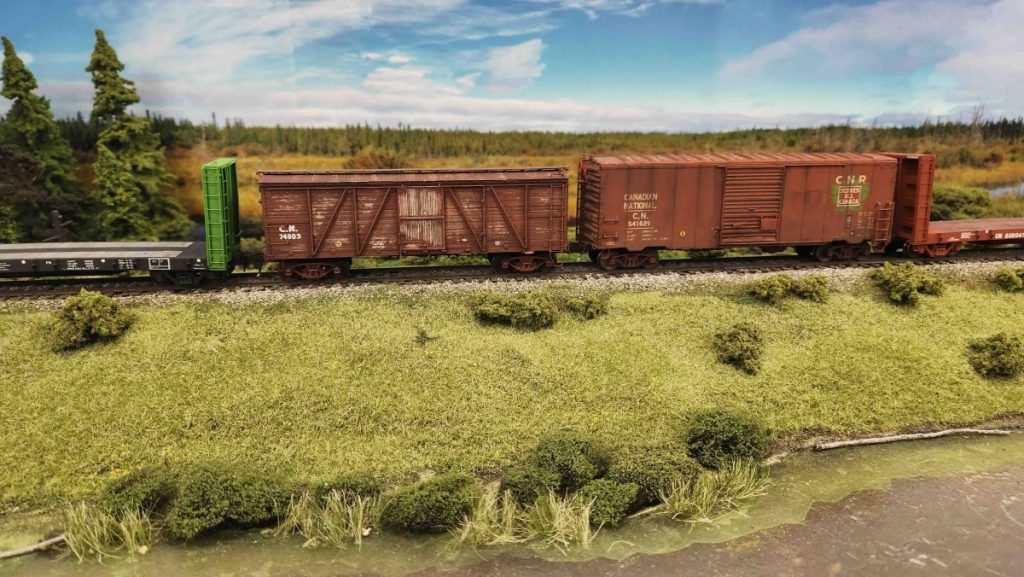
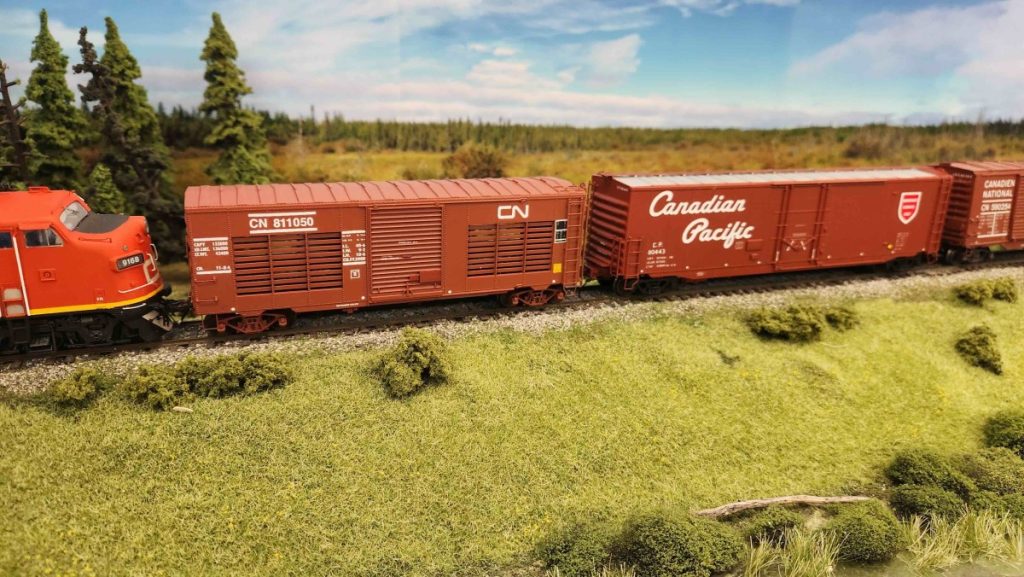
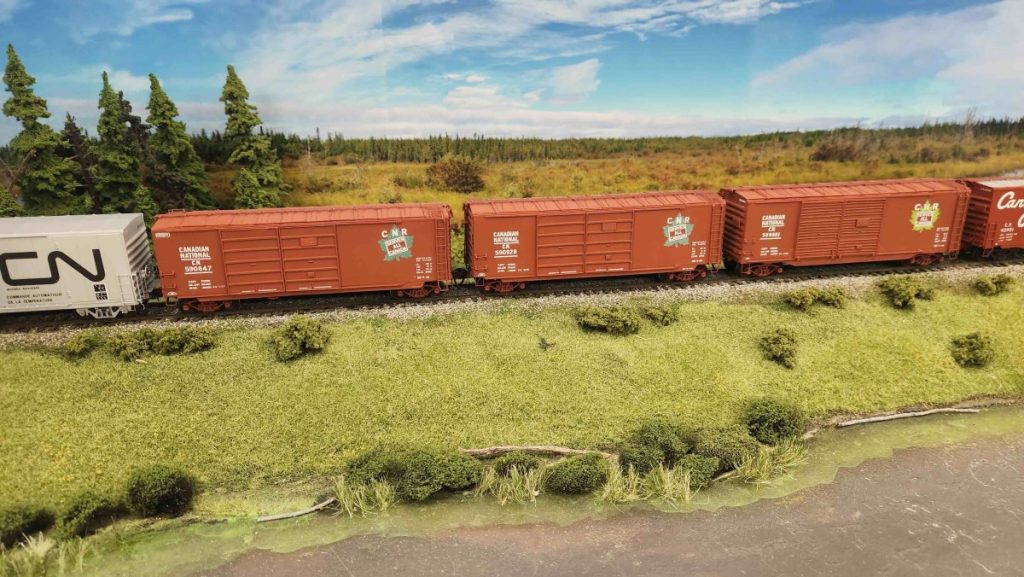
The Modelled Railway
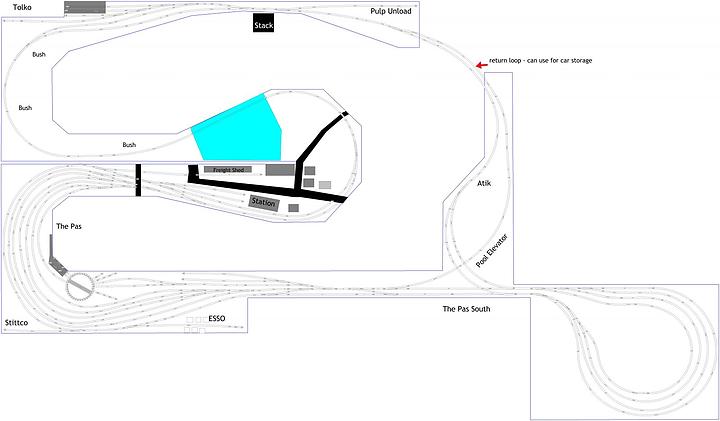
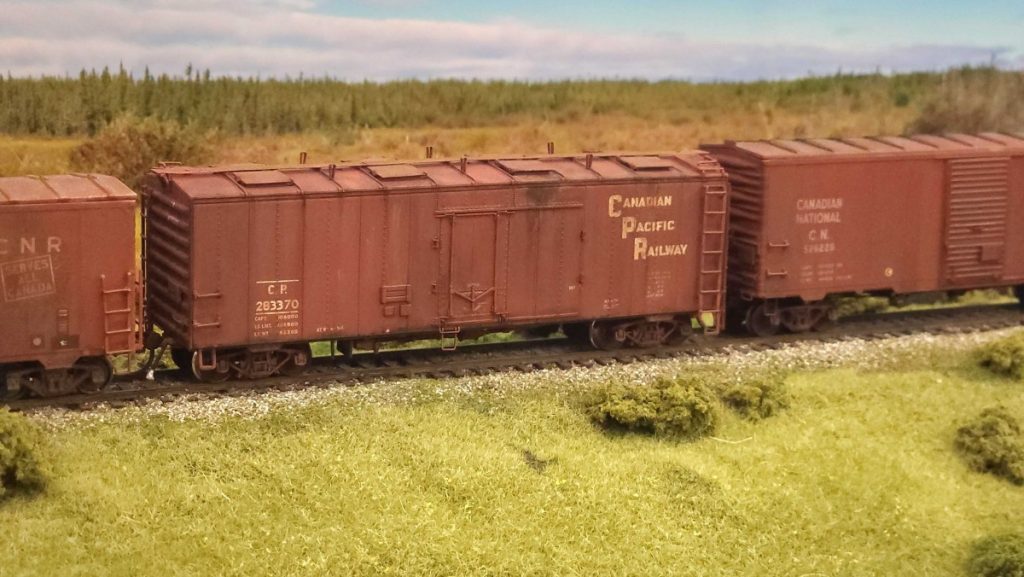
The HO scale Hudson Bay Railway Flin Flon Subdivision is currently being constructed to represent the line between The Pas (southern terminus of the HBR) and Flin Flon, with particular focus on the mining and smelting operations of the HBM&S, circa 1981 to 1983. The early 1980’s timeframe is attractive as there was ample freight and passenger traffic from all northern areas, heavy reefer and refrigerator traffic to and from northern destinations, and significant railway facilities in The Pas. I have access to a sizable slide collection from that era to help with modelling. There is a lesser secondary focus on the Omnitrax operations between 1995-1999.
A lower level five track staging yard is used to represent northern destinations (Lynn Lake, Thompson, Churchill) on the HBR system. Upper level staging will represent southern destinations (Canora, Winnipeg, etc.). Upper level staging will be two tracks in the helix.
Prototype
• Style:
• Prototype:
• Location:
• Era:
Prototype (with some modifications to enhance operations)
CN Hudson Bay Railway Flin Flon Subdivision
Northern Manitoba
1981-1983
The Layout
• Location:
• Scale:
• Size:
• Control:
• Accessibility:
• Mainline Length:
• Yards:
• Scenery Complete:
• Track Construction:
Coquitlam
HO
14 feet by 20 feet with helix in adjacent room
Digitrax DCC
Basement access via cement sidewalk along side of house – 13 steps down to basement patio door; 3 steps inside the house.
~ 90 feet in place on lower deck;
~ 180 feet on upper and lower decks when completed;
helix will have roughly 90 feet of track when completed.
2 completed (Channing and Flin Flon),
3 total when upper deck completed (The Pas yard).
5%
MicroEngineering Code 70 on layout,
Code 100 in staging yard and helix.
Switches a mix of MicroEngineering, Peco, Shinohara and hand built.
The Lower Deck
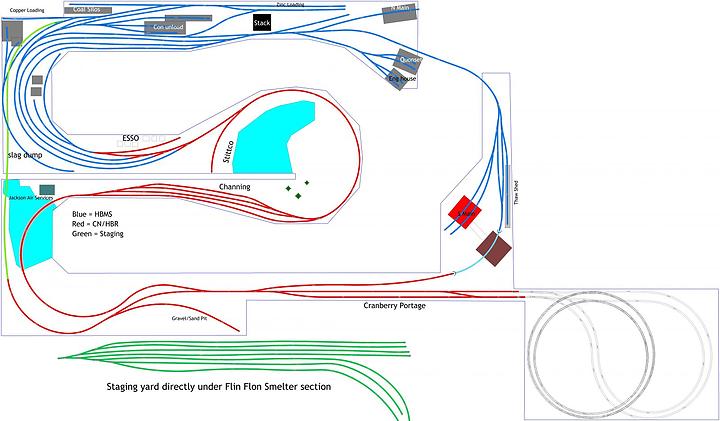
The Upper Deck
Back to Layout Overview
Past Layout Tours for RMMBC 2025
Quincy and Torch Lake — Jamie Neilson


Jamie’s On3 narrow gauge layout is very much under construction and consists of a series of scenes or vignettes, a few prototypical, but most generic. The prototype scenes are based on the Copper Country of northern Michigan where Jamie was luck enough to encounter many small railroads, some abandoned, but most just hanging on for dear life. This short line paradise left Jamie with many memories, and generic locales fill in the blanks and offer operational possibilities. The engine facility is nearing completion and operational. The layout is DCC/Sound with both hand-laid and flex track
The eventual idea is to have point to point operation, staging and the ability to run continuously for the many small rail fans growing up in the extended family. Themes to be included are mining, logging, western small town and lake front.
Donald Switching Layout – Brian Rudko


Donald is an HO-scale switching layout for one or two operators using pre-scripted switch lists or using randomized dice-generated switch lists. It is a six-foot long “cameo” with a four-foot removable extension on each end. The extensions act as staging and also as functioning parts of the layout.
The location modelled is the edge of town (generic town of Donald, Ontario) in the early 1950’s. The layout was inspired by Ian Wilson’s wonderful series of books on the Canadian National in Southern Ontario in the steam and early diesel era.
The layout is constructed with the ability to swap era and location. Using lift-out plates the layout can be switched to a late 1950’s New England edge of town, “Oakland.”
Canadian Pacific Mountain Subdivision — Geoff Gooderham
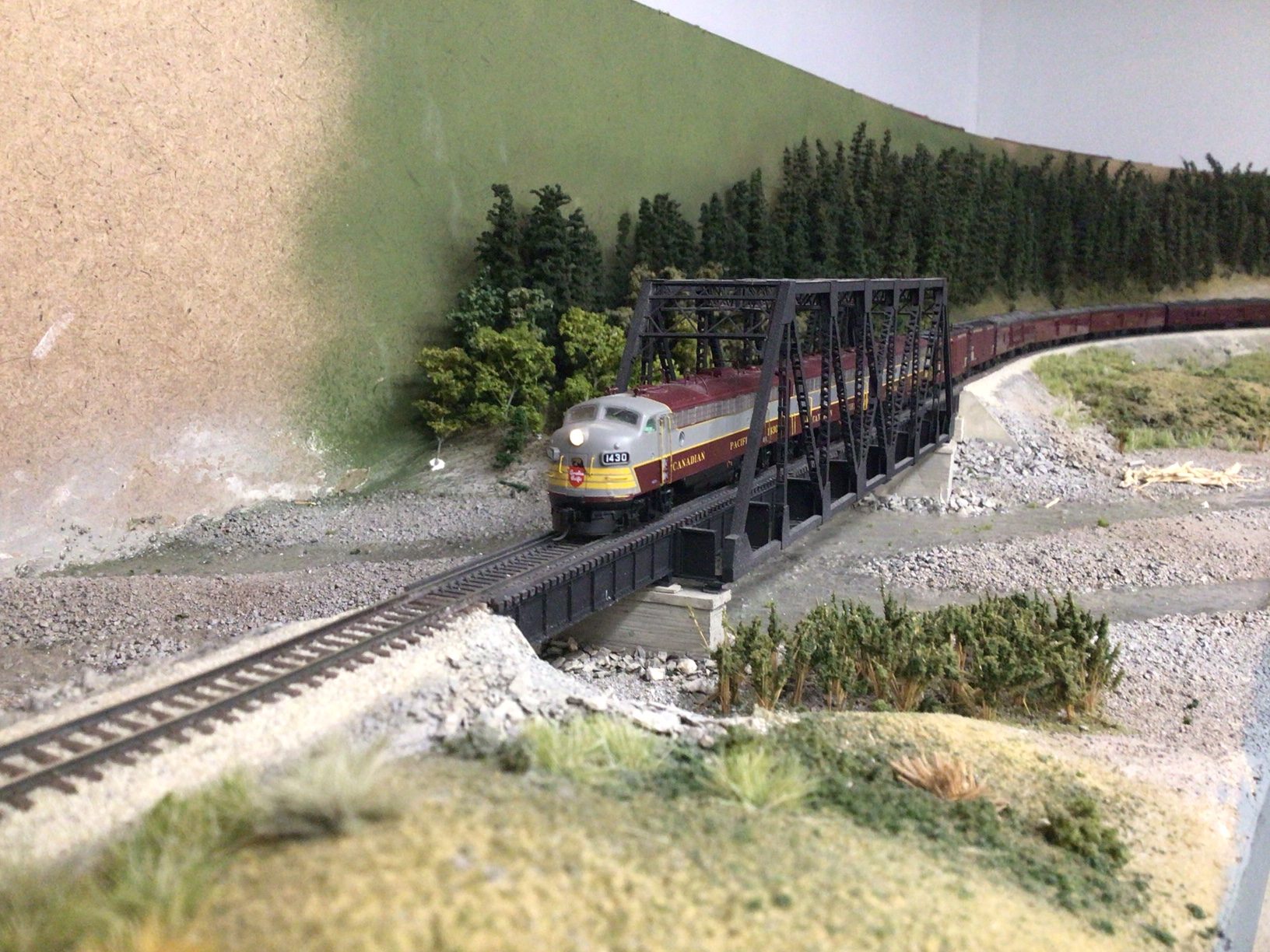
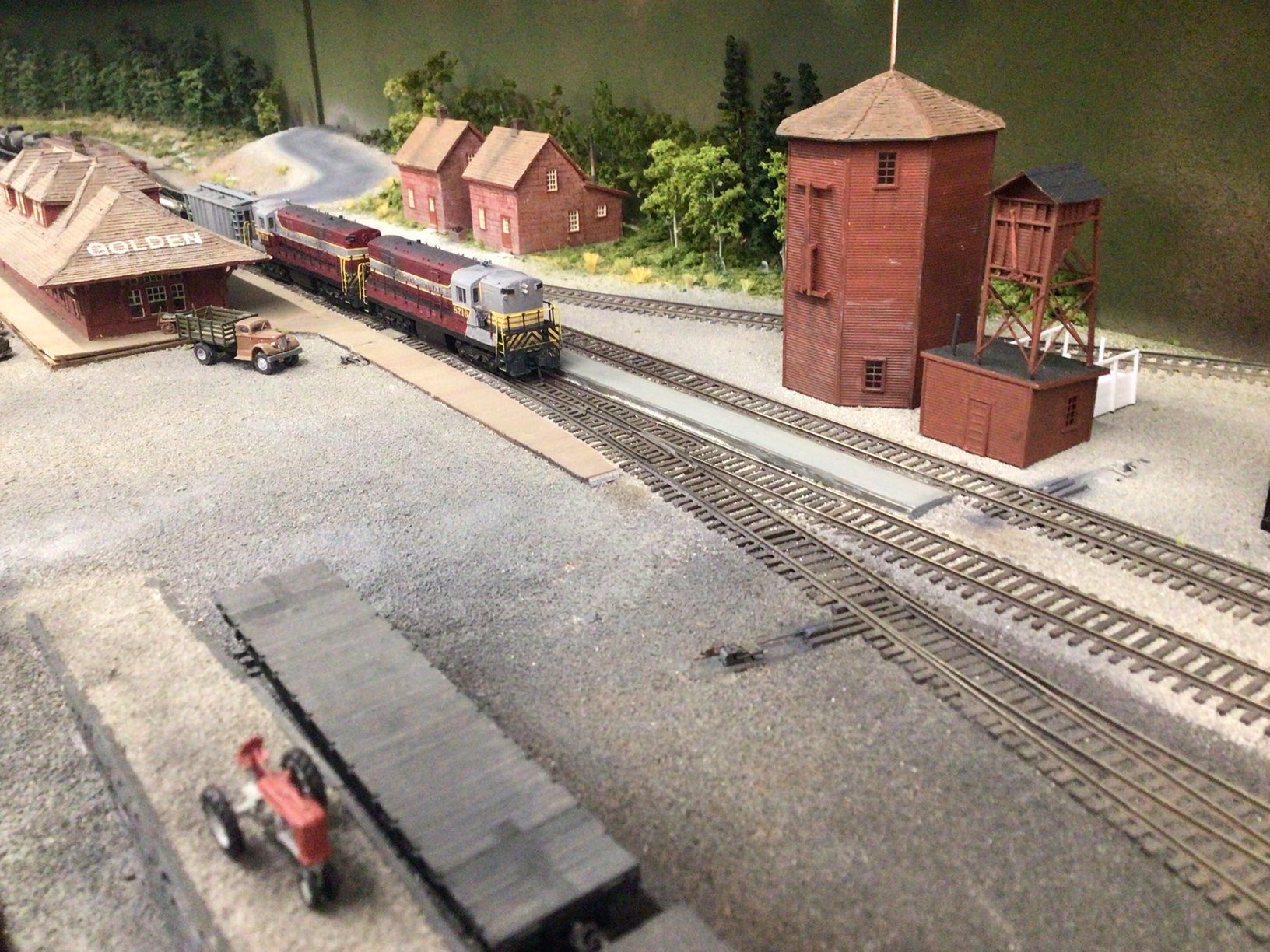
The Canadian Pacific Mountain Subdivision is a representation of Canadian Pacific’s mainline from Field BC to a few miles west of Golden BC as it would have appeared in 1958, modelled in N scale. The layout is an ‘around the walls’ 2 1/2 lap ‘nolix’ point to point arrangement with stub end staging at both ends. Trackwork, featuring code 55 track and handbuilt turnouts, is complete and scenery is nearing completion. The layout features scratch built structures and a substantial proportion of proto correct rolling stock or close to proto stand ins, as well as detailed and painted locomotives. Control is DCC. The current running scheme is ‘railfan,’ but a more operation-focused scheme is likely to be the next step for this layout.
Western Midland — Mike Chandler
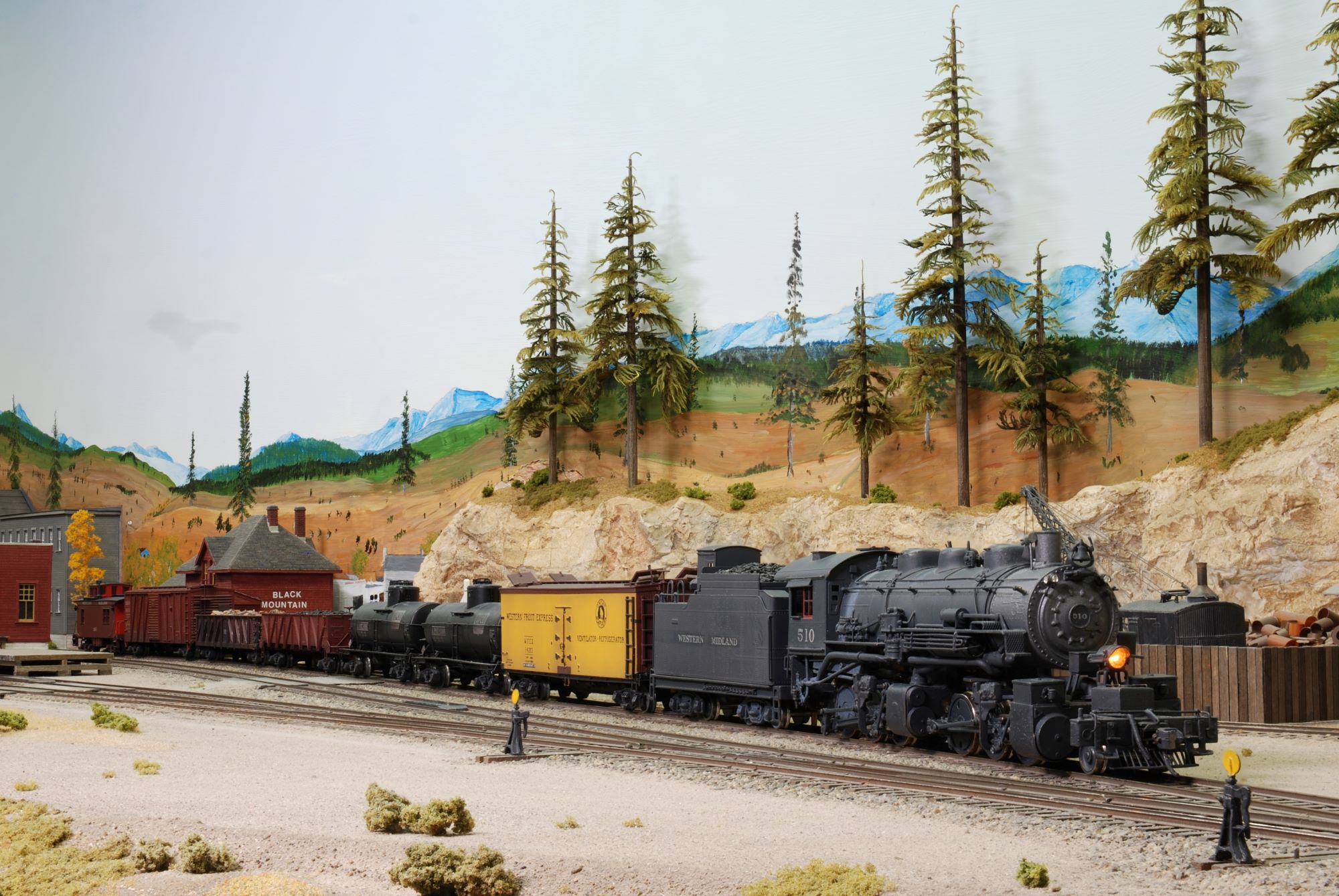
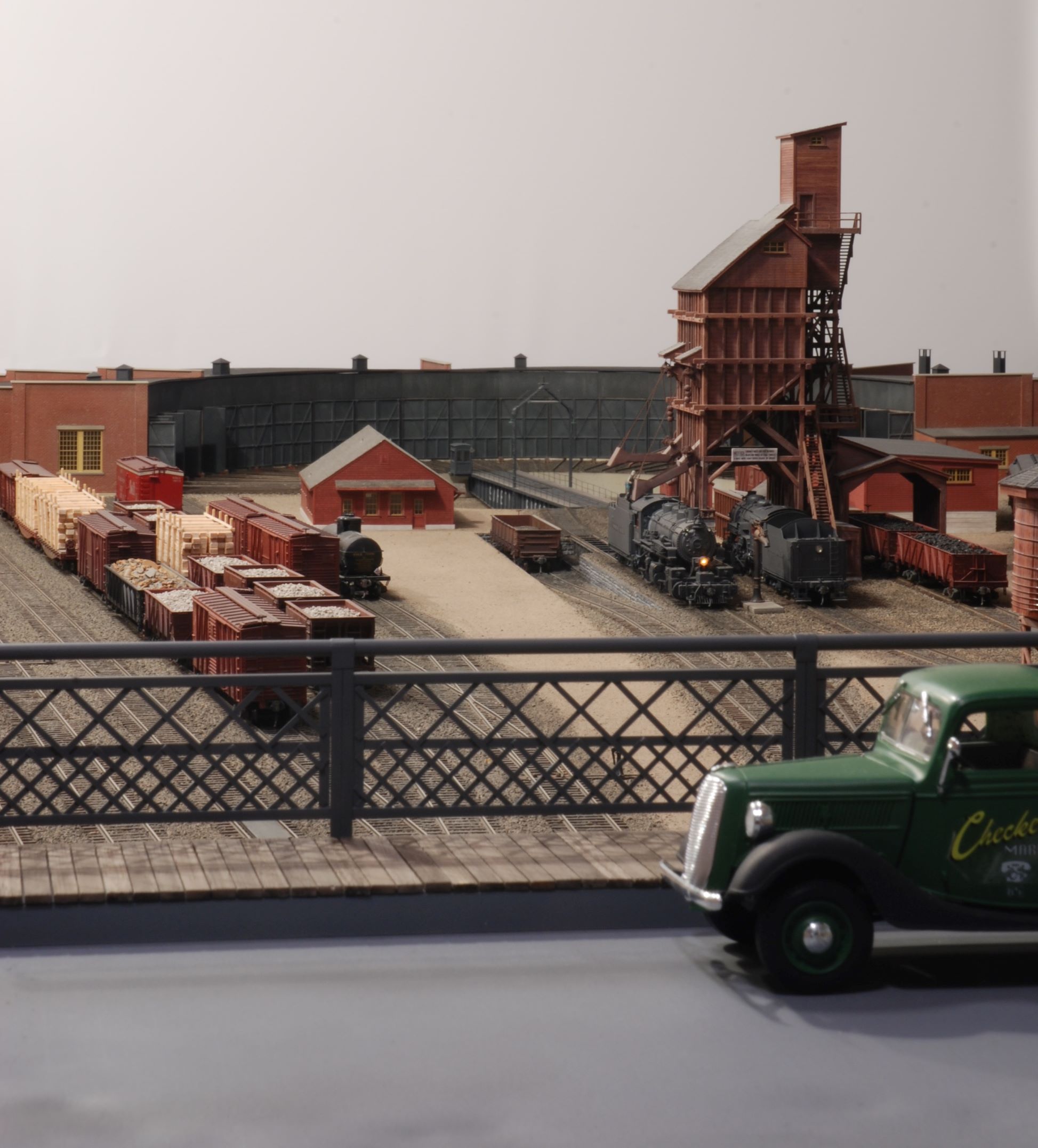
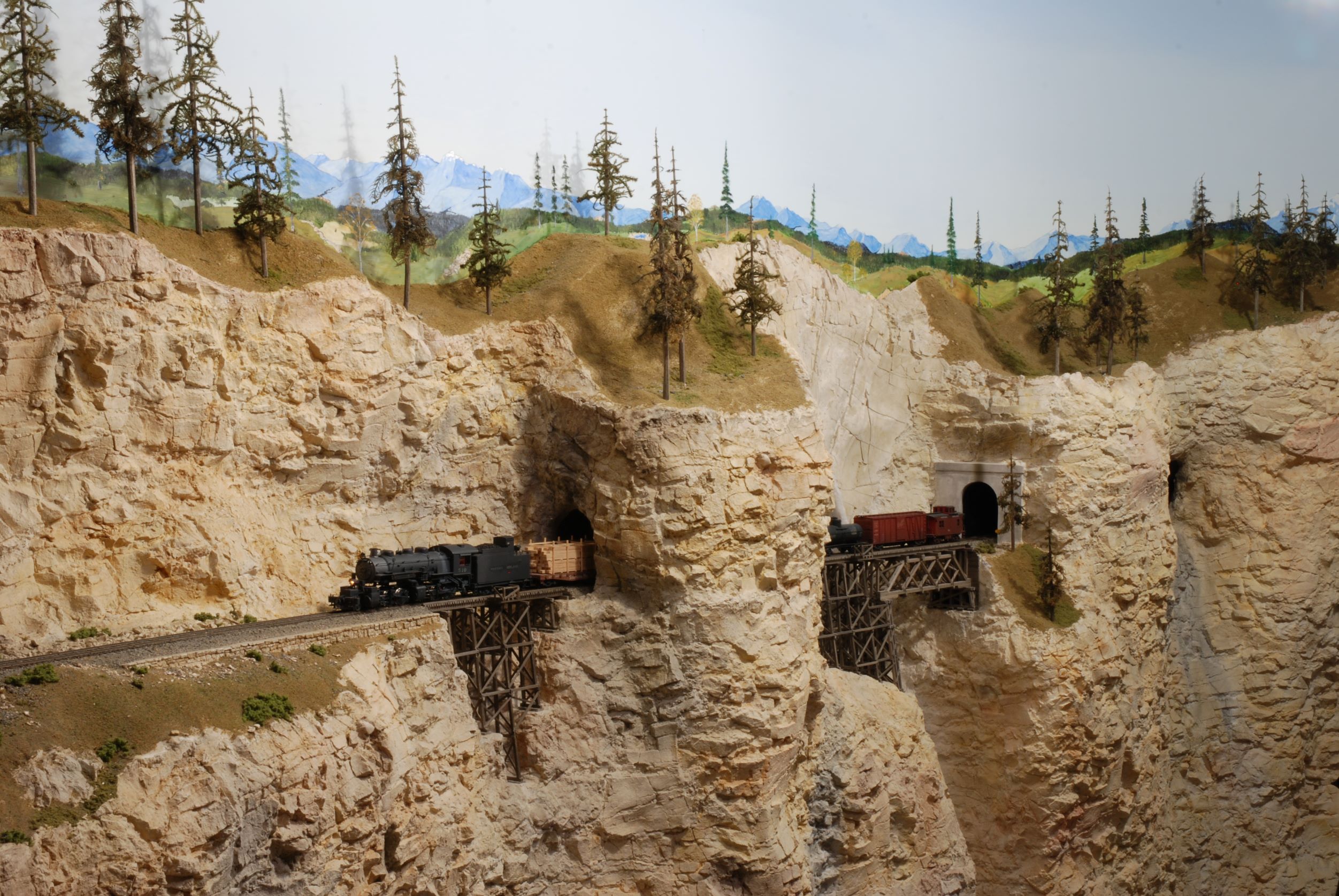
The Western Midland is a single level Ho scale mountain railroad with a three scale mile mainline and a very diversified traffic base of both way freights and through trains, most of which originate and terminate online. It is a freelanced railroad nominally set in Montana, and is based on a design by the legendary track planner, John Armstrong. The layout is 100% operational with scenery covering approximately 95%, and is controlled by Lenz DCC. Set in September, 1938, the Midland is an all-steam road, and is typically operated by a 12-person crew using timetable and train order for dispatching with car cards and way bills for freight car forwarding.
Kettle Valley Division — Anthony Craig
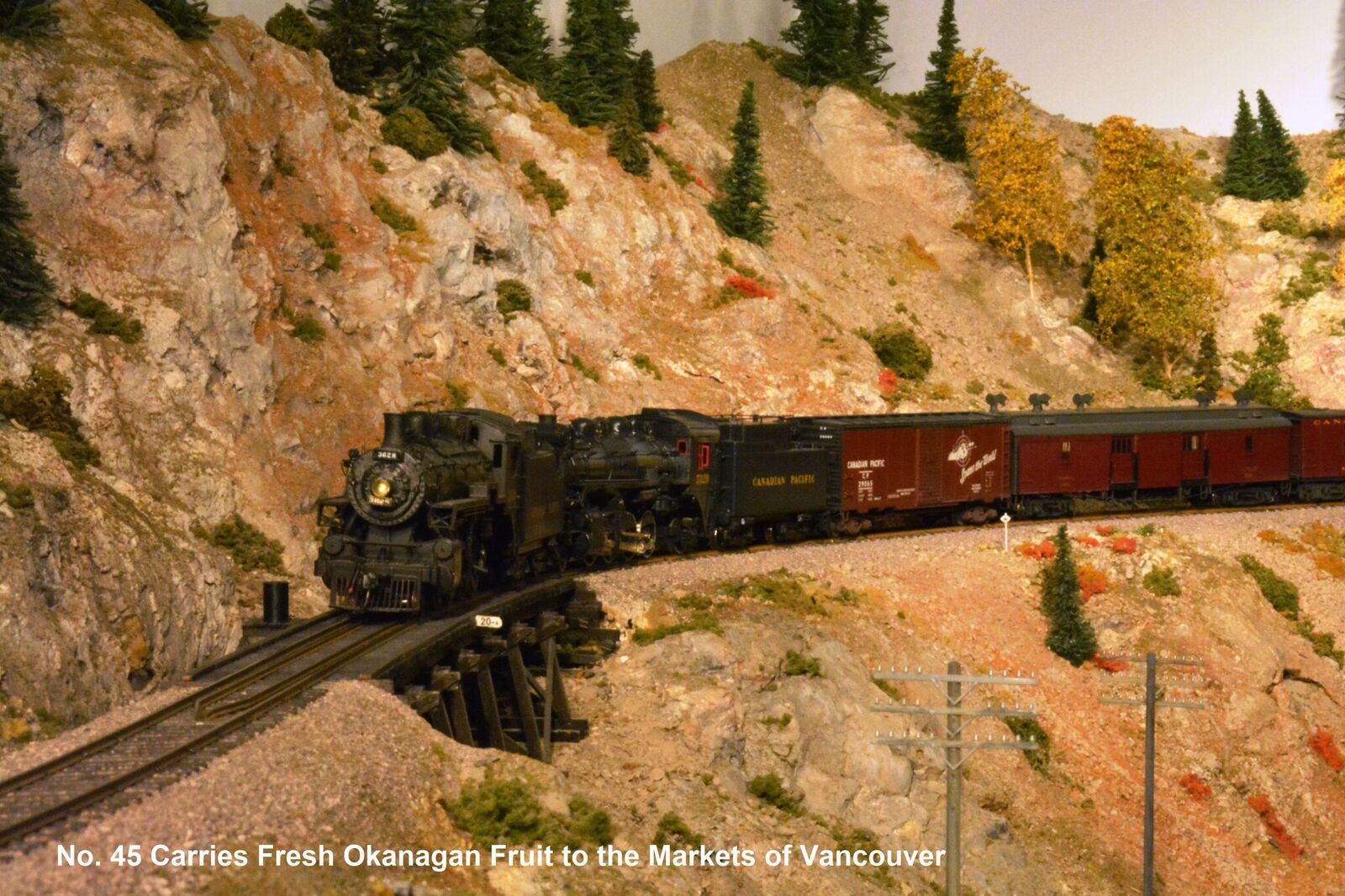

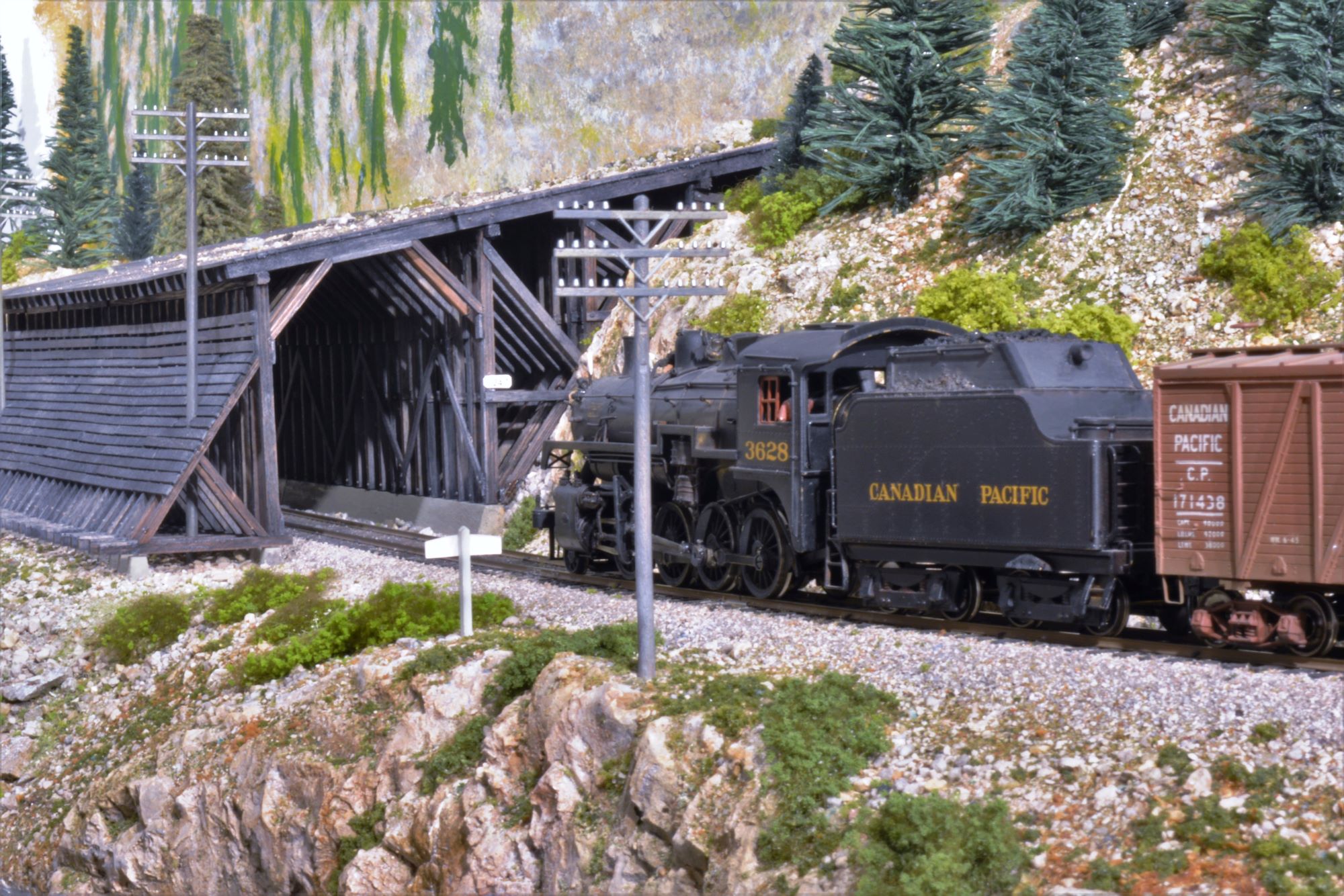
The Kettle Valley Division of the Canadian Pacific Railway is a mountain model railroad in HO scale set in southern British Columbia. It is very faithful to the prototype in its topography, infrastructure, trains and operational features as they were wen steam was king in September 1949. The 465-foot mainline (7.7 scale miles) is stretched out over two decks with a helix in the middle and staging tracks at each end. Most of the scenery and trackage closely resemble specific locales of two subdivisions on the west side of the Kettle Valley Division, between the towns of Hope and Princeton. The small division point yard of Brookmere is the centre of layout activity. Four passenger trains, many through freights, way freights and pusher service are featured on the Coquihalla Sub. The layout is 100% operational, and is controlled by Lenz DCC with CVP radio throttles. Scenery is approximately 75% complete.