

About
Each year the RMMBC committee selects a set of local layouts that are willing to host visitors. Layout selection is determined by attempting to keep them in reasonable proximity to each other and by finding new layouts as much as we can (or ones that we have not seen for some years).
When
The layout tour typically takes place the Friday evening of the in-person meet.
(Refer to the meet schedule for details).
How to Participate
Registration for the layout tour is part of the meet registration process. There is no extra charge for the layout tour but you must be registered.
The tour is self-driving. Detailed google map instructions will be provided. Car pooling is encouraged.
Willing to be a Layout Host
We are always interested in expanding our list of potential layout hosts. Your layout need not be “the world’s best layout”. Visitors tell us that they learn as much (sometimes even more) from seeing a layout in midst of completion as they do from visiting a “finished” layout.
Your layout can be any scale, can be large (fills a room) or small (fits on a shelf). Perhaps the only constraint is that your room or display area must be able to accommodate a reasonable number of visitors.
Most of our layouts are N or HO, so we are very interested in layouts in other scales.
If you are willing to consider hosting your layout, please contact our Layout Coordinator for information.
The layout tours for 2027 will be posted in the new year.
The 2026 tours were as follows.
Layout Tours Overview 2026
We have attempted to keep driving distances between layouts reasonable.
|
Layout |
Location |
Scale |
Comment |
|---|---|---|---|
|
Coquitlam |
HO |
WIP, modular shelf-like layout | |
|
Coquitlam |
HO |
Large room sized layout | |
|
Burnaby |
HO |
WIP, multideck, large garage sized | |
|
|
|
|
|
Layout Descriptions
Matthew Buchanan – Vancouver Terminal Railway
The Vancouver Terminal Railway is situated on top of the wet bar in Matthew’s basement rec room. It has been slowly under construction for three years. It features a couple real life locations, Vancouver’s CP Waterfront station tracks, and the BC Sugar Refinery.
The layout is made up of three modules which can be taken out, with two more planned. It is in a point to point configuration, but he might install a lift out for continuous operation. For track it has one switch and a few pieces of flex track attached. Wiring has started, with a lot of track laying to come. There is one partially completed building and no scenery yet.
He is looking forward to having the three modules connected by operating track by May and having a bit of scenery and some mocked up buildings.
Prototype
• Style:
• Prototype:
• Location:
• Era:
Prototype (loosely)
CP and Others
Vancouver
Late 70s early 80s
The Layout
• Location:
• Scale:
• Size:
• Control:
• Accessibility:
• Mainline Length:
• Yards:
• Scenery Complete:
• Track Construction:
Coquitlam
HO
8’ x 6’ (approx)
Digitrax DCC
Basement ground level
12 feet
One
0%
Peco flextrack, code 83


Back to Layout Overview
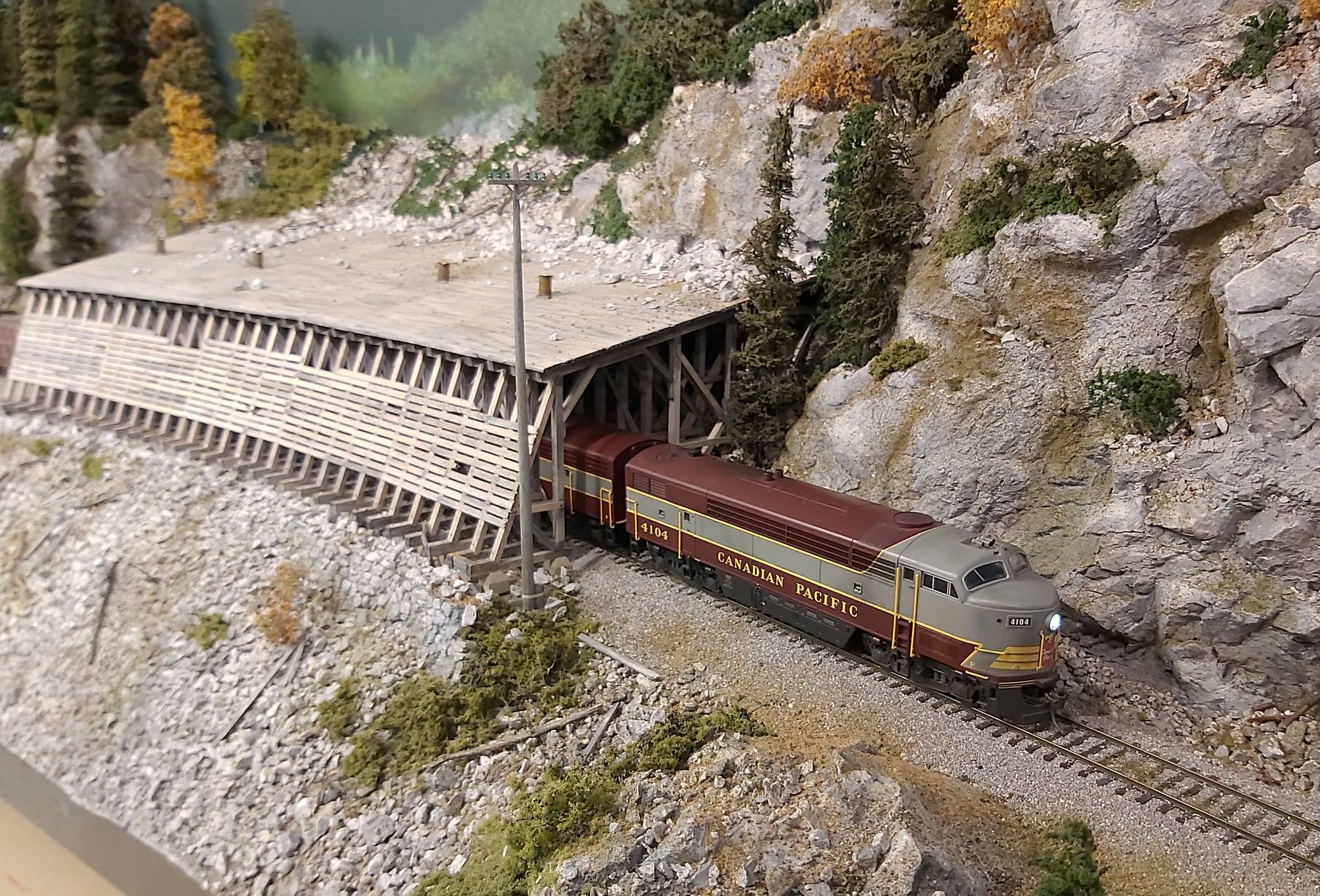
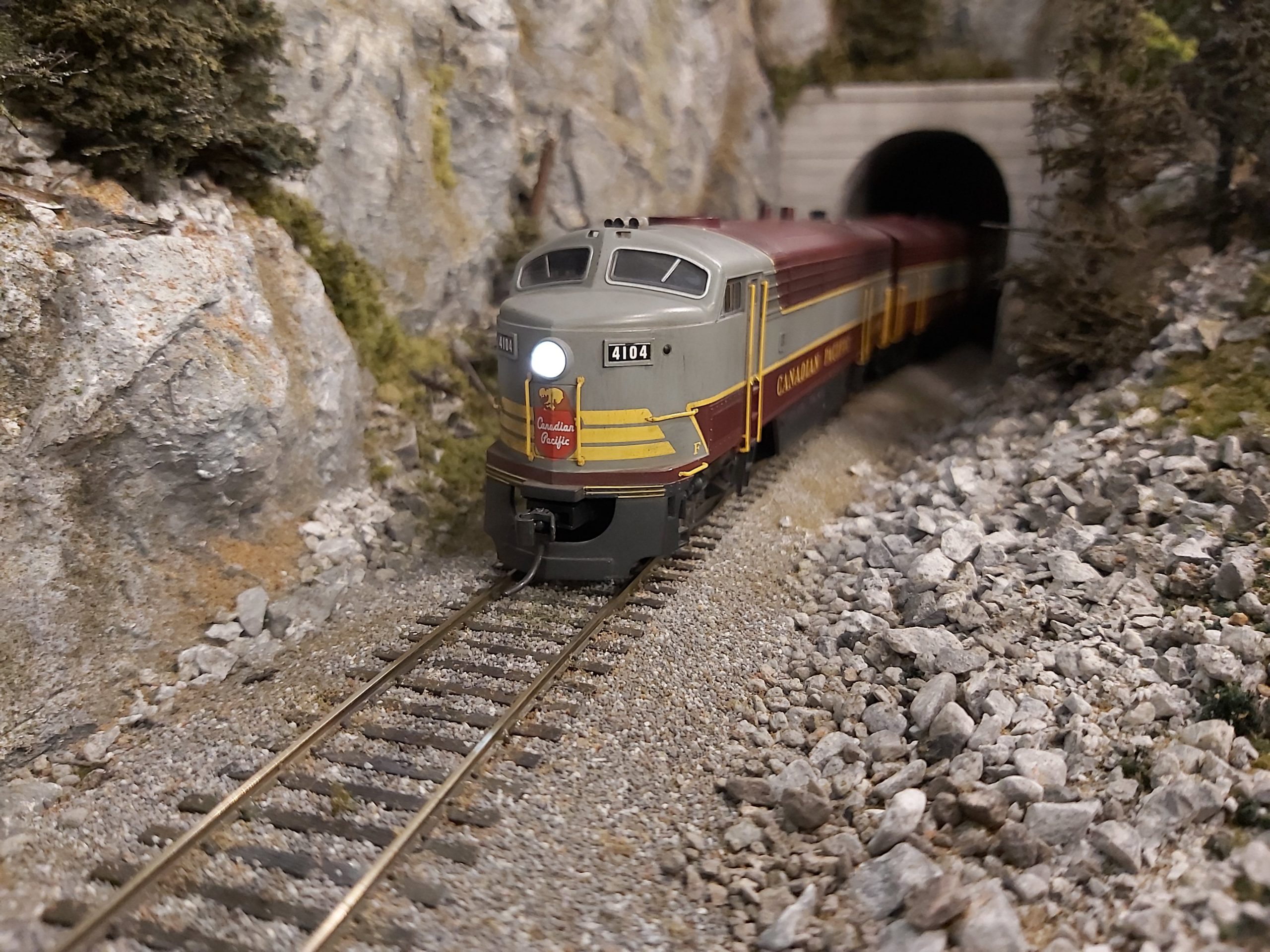
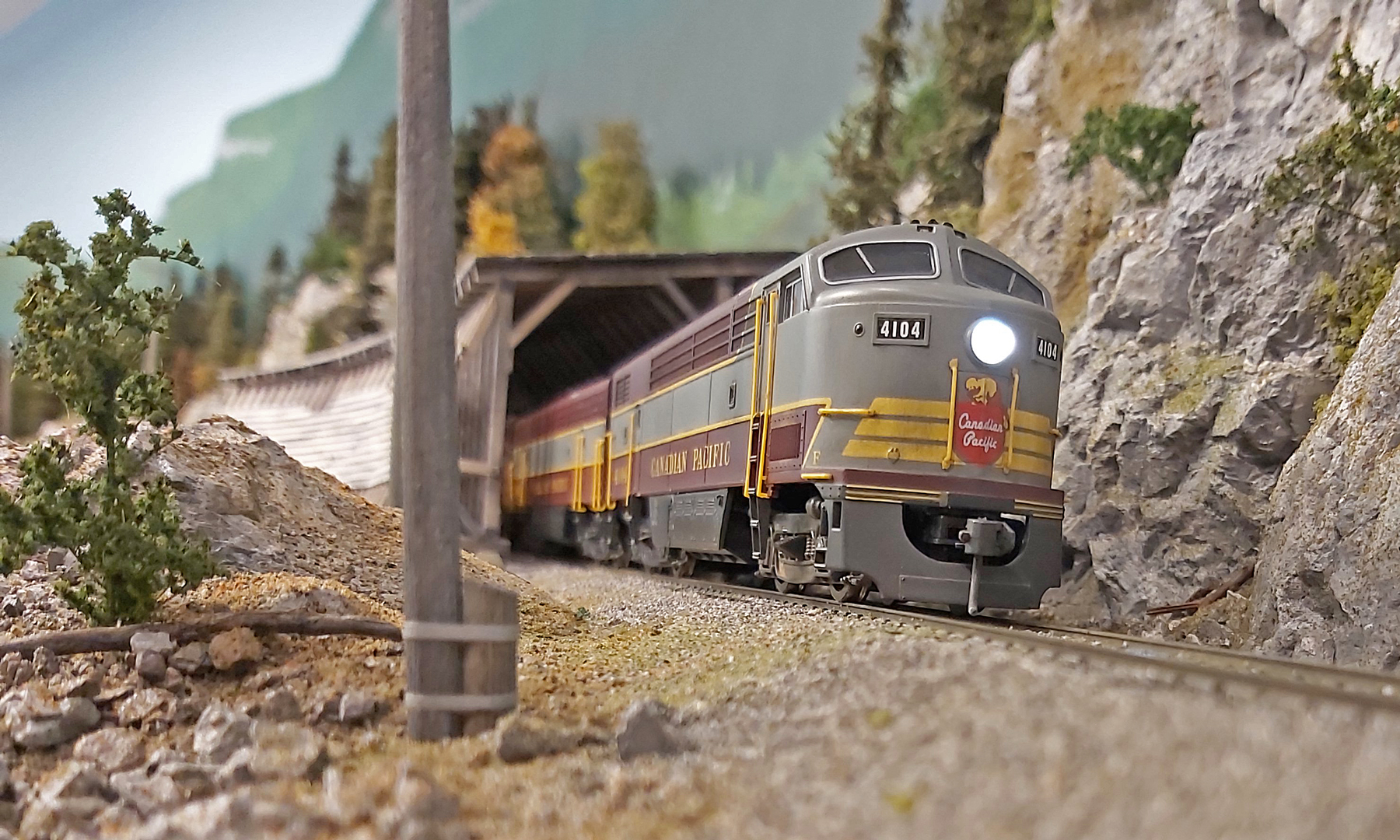
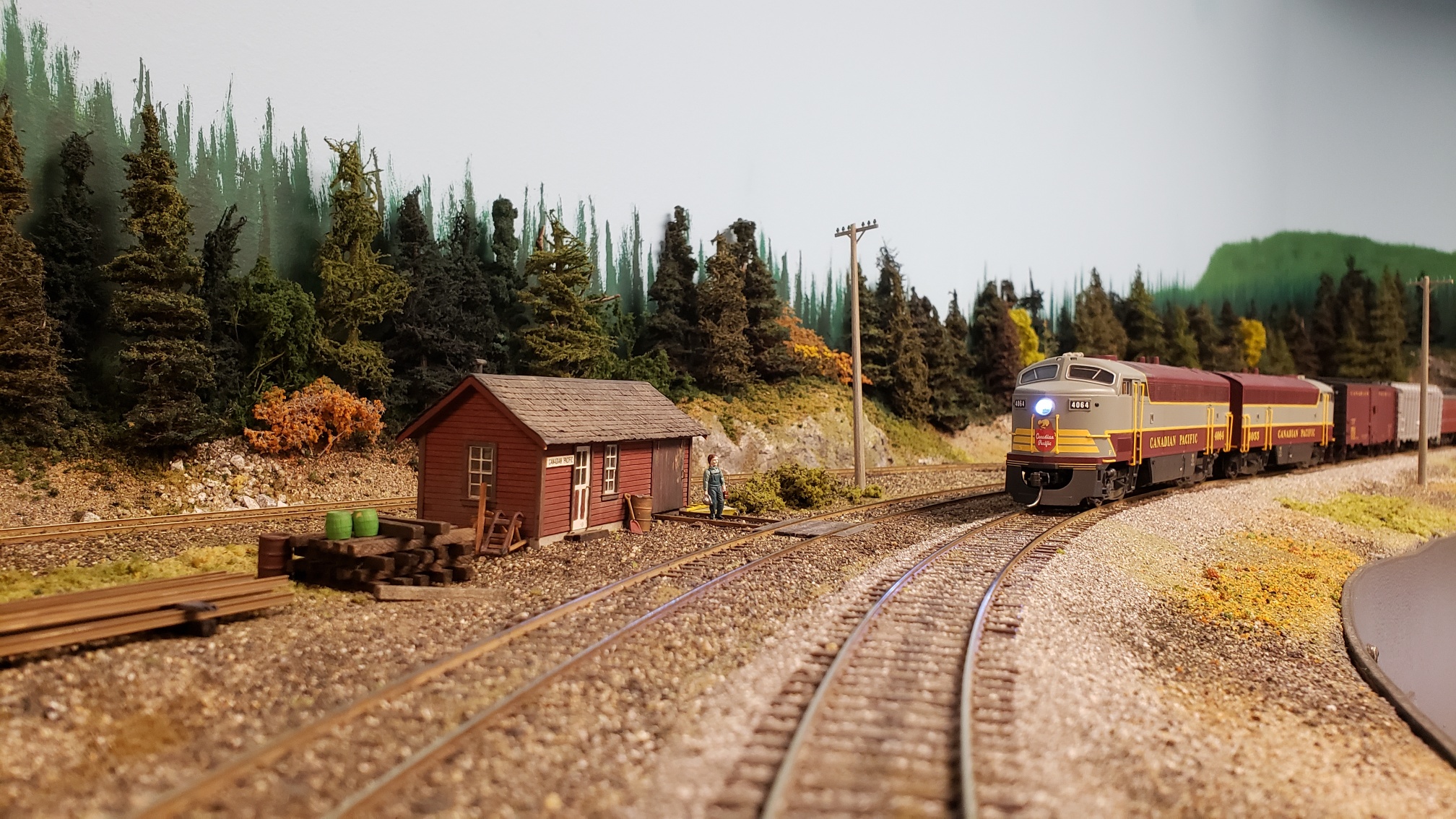
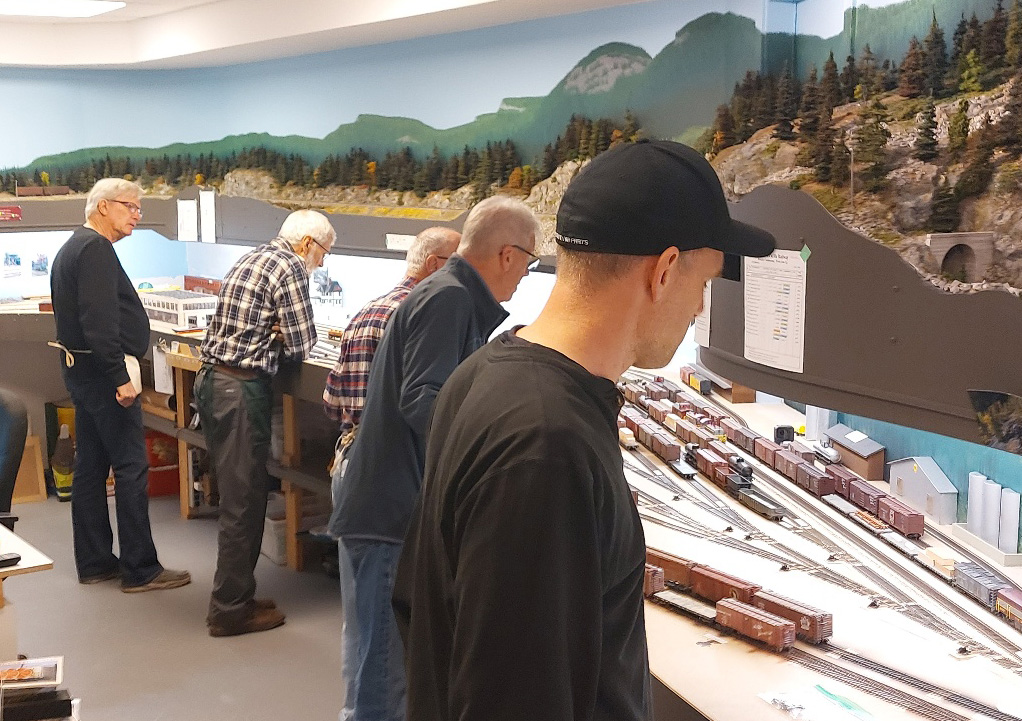
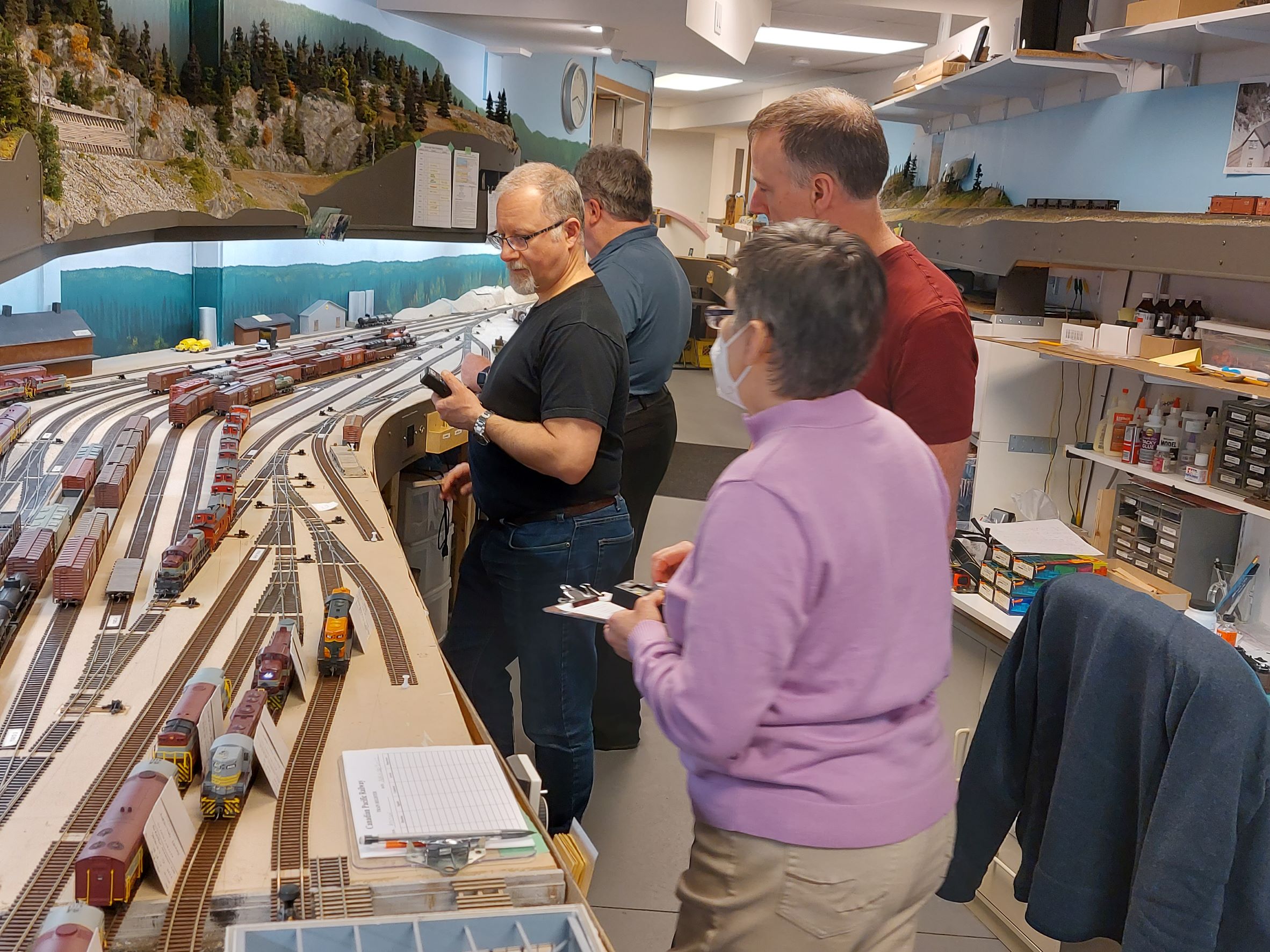
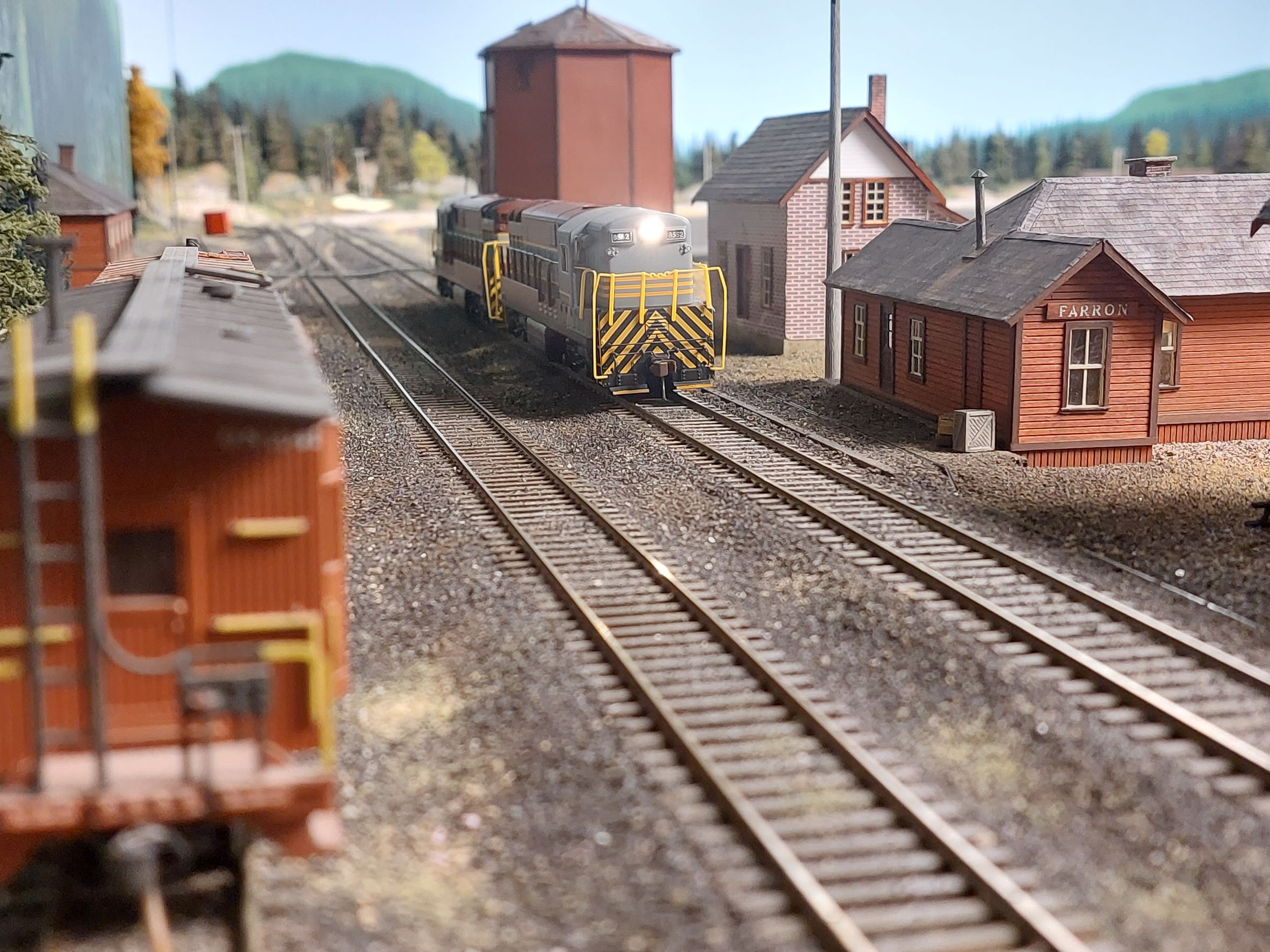
Scott Calvert – Boundary Sub
The Prototype
• Style:
• Prototype:
• Location:
• Era:
• Interchange:
Prototypical
Canadian Pacific Railway
Southeastern British Columbia Boundary & Slocan areas
1961/1962
Great Northern, & CPR lake barge operations
The Layout
• Location:
• Scale:
• Size:
• Control:
• Accessibility:
• Mainline Length:
• Yards:
• Passing Sidings:
• Scenery Complete:
• Carspots:
• Motive Power:
• Rolling Stock:
• Track Construction:
Coquitlam
HO
Irregular; approximately 1200 sq ft.
Base LENZ system with CVP wireless throttles
Fully accessible
Current =400 ft, Ultimate = 540 ft
Nelson Divisional yard, Rossland Subdivision staging yard,
Proctor/east staging, & a temporary west staging
8
10%
Constantly increasing due to construction
Primarily Fairbanks Morse diesel units, with a few others
A whole bunch
Micro Engineering flextrack and modified Shinohara turnouts – code 70
More Information
- Website: CP Boundary sub
- Youtube Channel: Scott Calvert
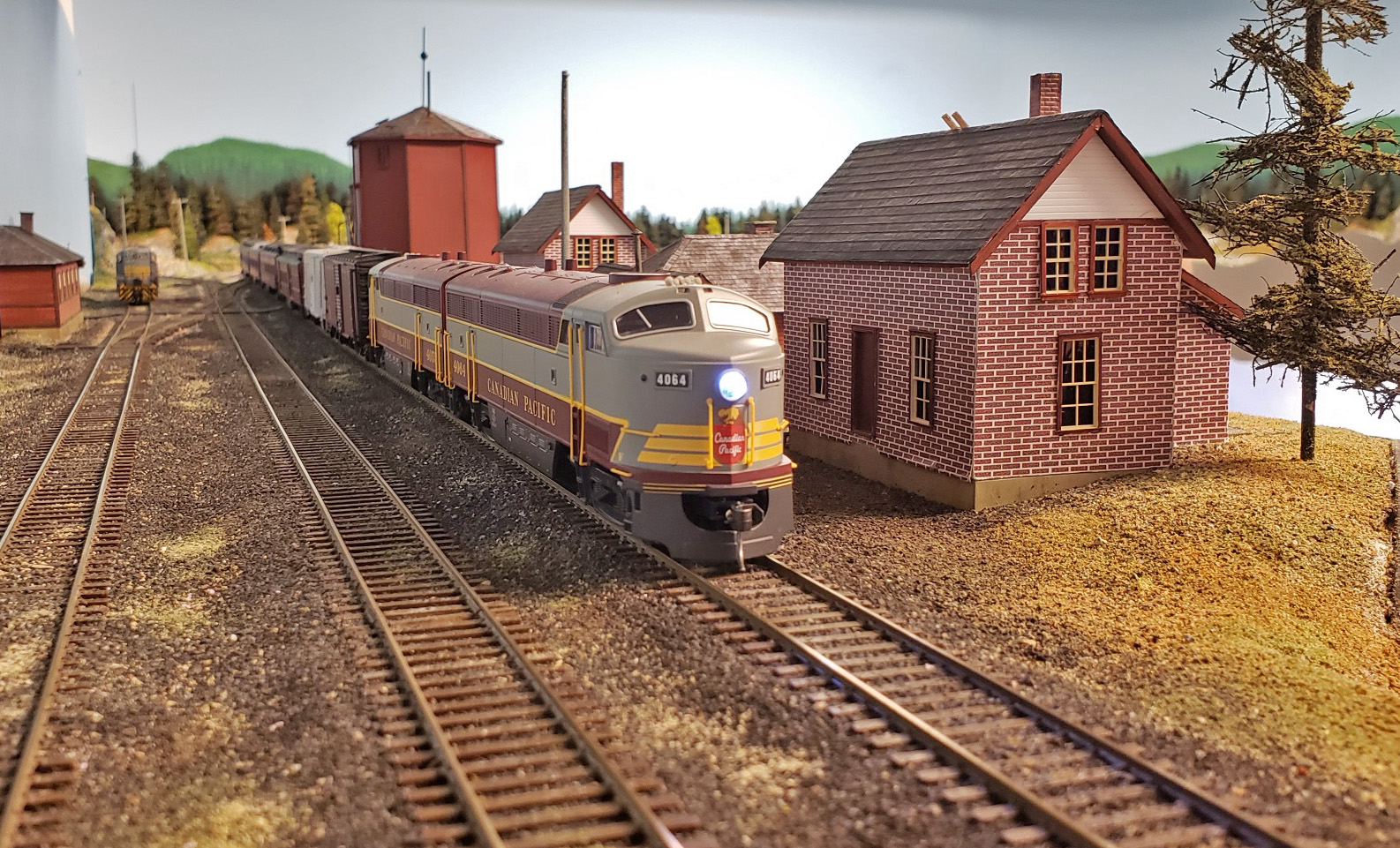

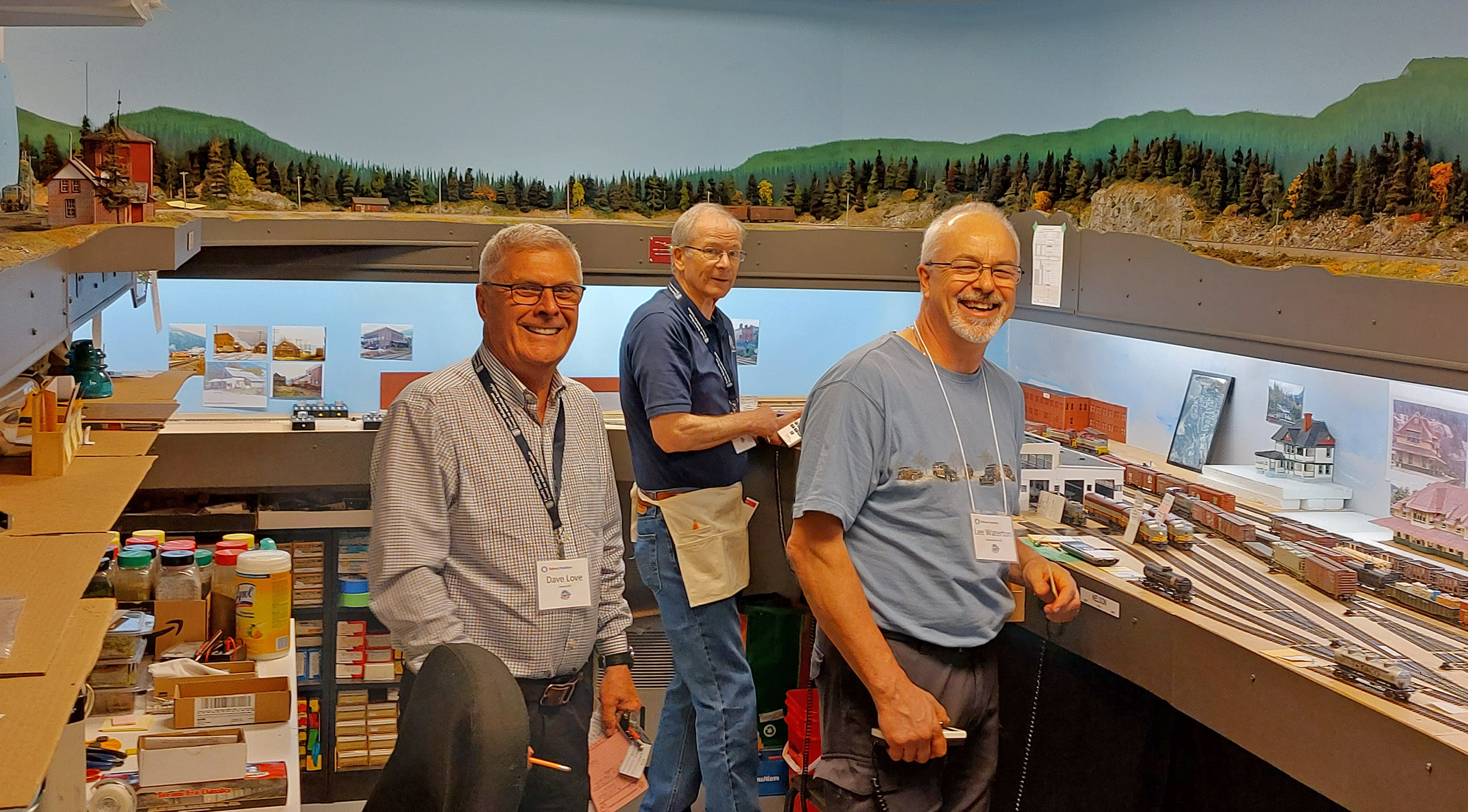
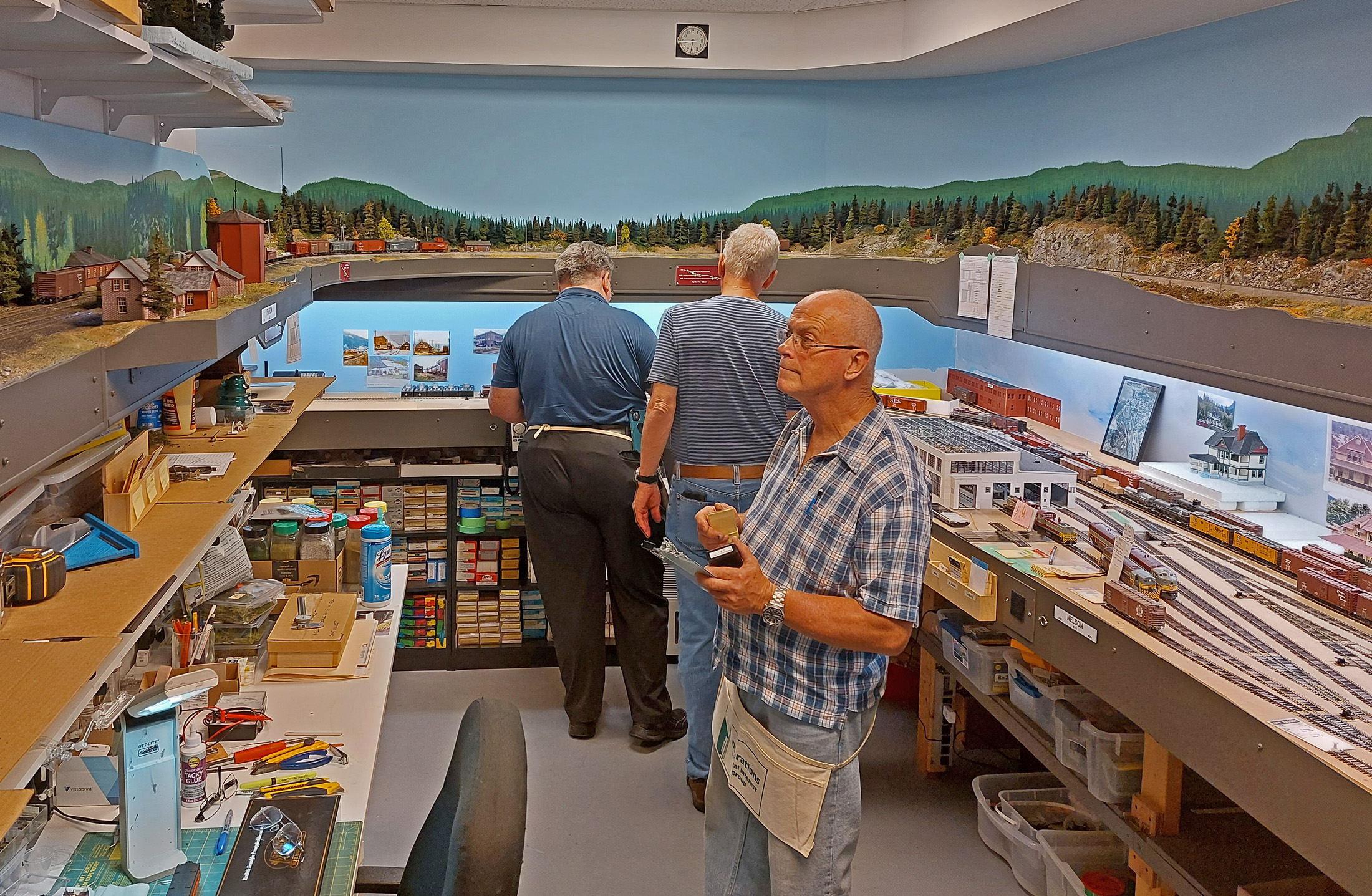
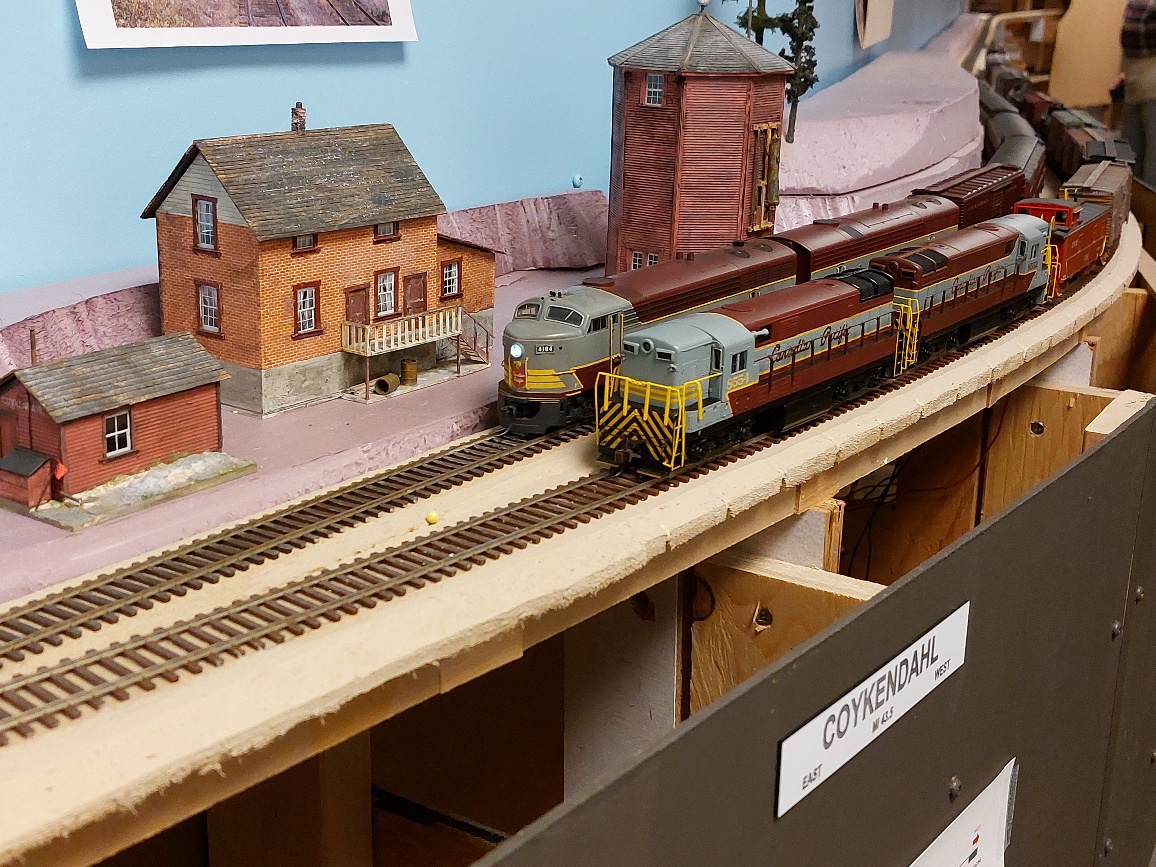
Back to Layout Overview
Gordon Mitchell – BCS Grassland Sub
A little background on the prototype
The BCS is a freelance system, very much influenced by life experiences. It reaches from the Vancouver Lower Mainland to Calgary, Spokane and the Okanogan. It was formed by acquiring lines as other railways lost interest and it also built some of its own routes. The Grassland sub was built to better compete with the big two between the Lower Mainland and Kamloops. It roughly follows Highway 5A from Grassland Junction to South Kamloops.
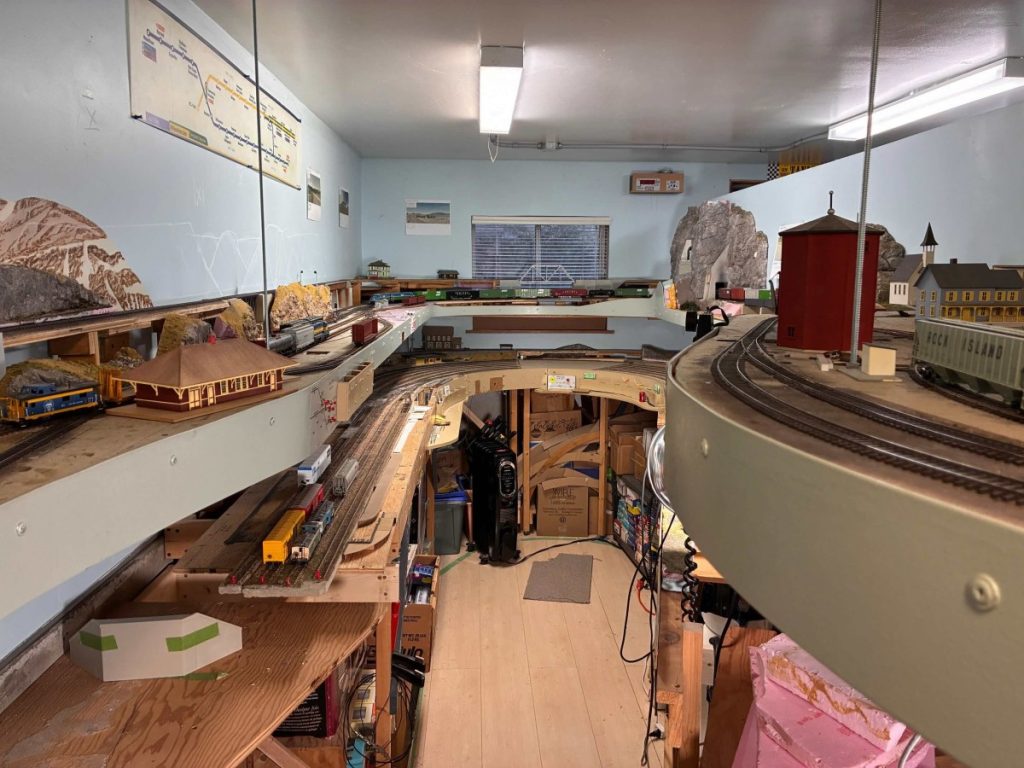
The Layout Itself
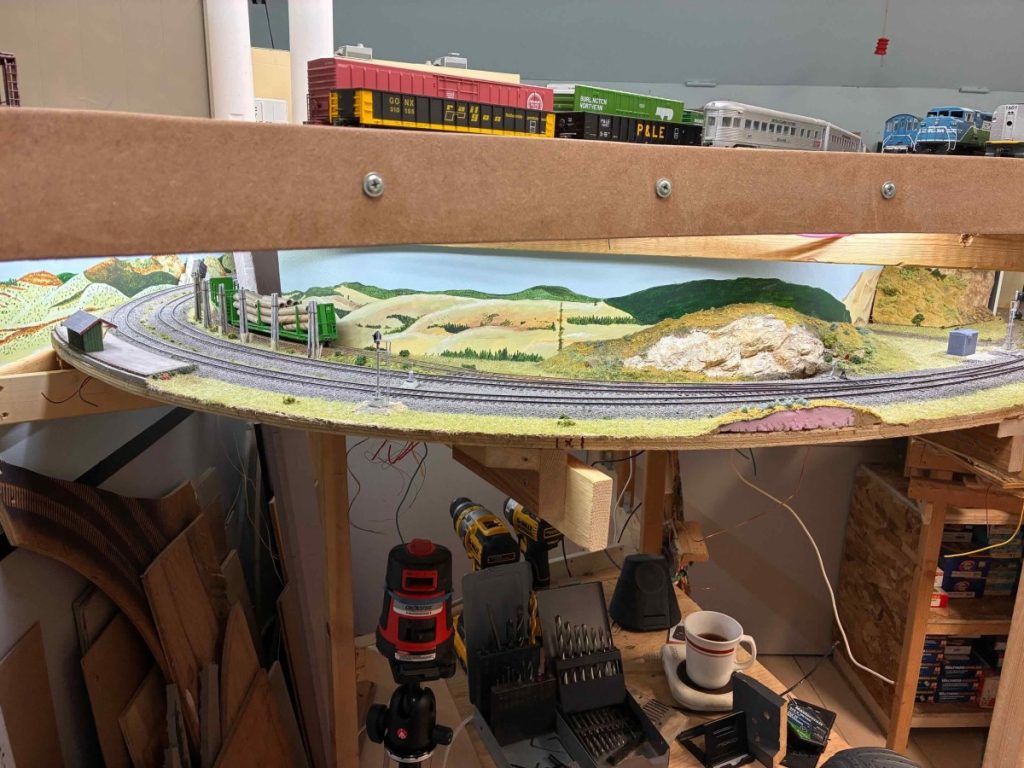
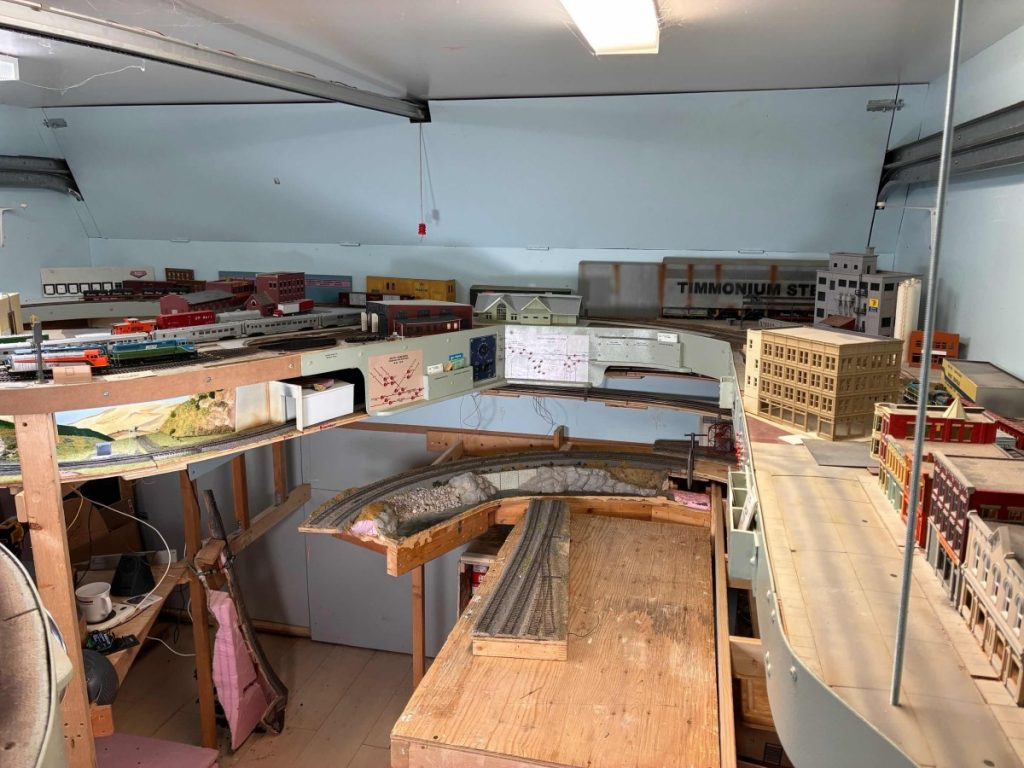
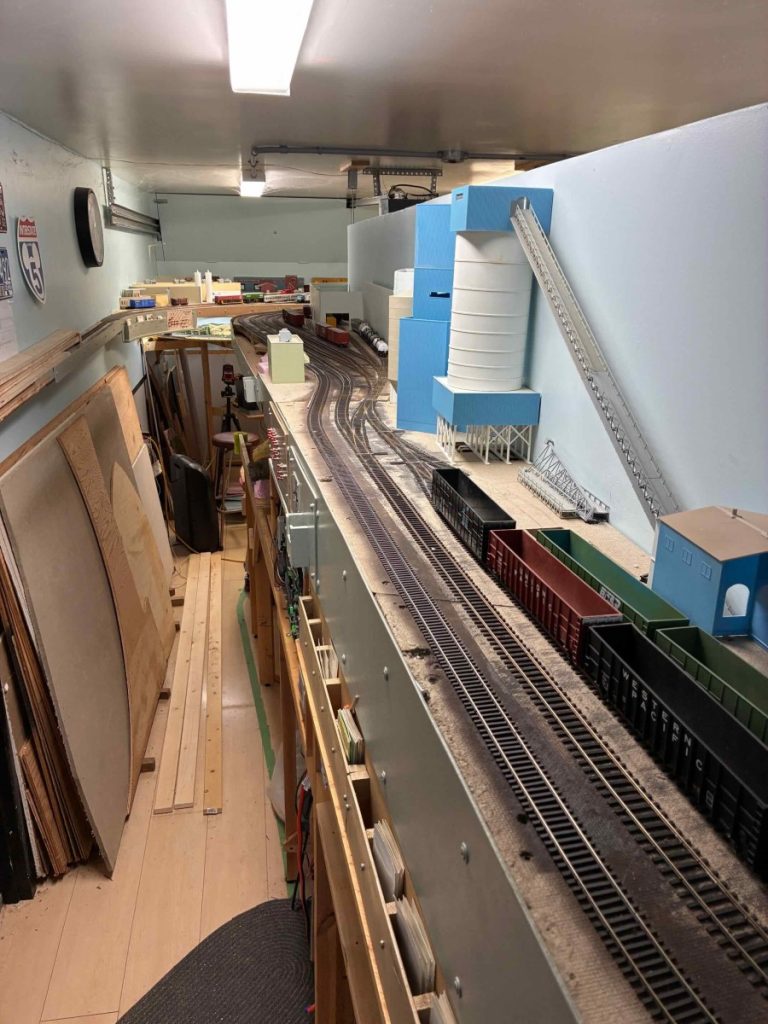
The layout is 24’8” X 10’6”, HO scale in a former garage, accessed by stairs, and under construction since late 2021. Track is ready made or hand laid. Where possible, I have reused parts of previous layouts. It has two levels and will have a third staging level. The upper level is close to being able to host operating sessions. The Nicola Sub will be visible for 65 feet. The Grassland sub will take 180 feet to reach South Kamloops. There will be three 20+ foot sidings. The staging area will have seven up to 40 foot staging tracks plus two tracks for passenger trains and a reversing loop. A continuous loop to loop route can be set for 410 foot run. I estimate the layout will take a crew of six including an RTC.
The major yard is at Quilchena with smaller yards at Shumway and South Kamloops. There are interchanges with the Capilano Western at Stump Lake and the CN and CP at South Kamloops. South Kamloops traffic is mixed products whereas the rest of the line serves mining and forest products. The main reason for the line’s continued existence is the paper mill at Shumway. The main shop is at Quilchena with a minor facility at South Kamloops. I think there will be around 400 cars on the completed layout.
It is set some time in the 90’s or early 2000’s although I am sometimes replicating practices going back to the late 70’s or equipment that is after this era. Car forwarding is by car cards. Random distribution of common car types is done using a spread sheet, assigning appropriate car supply and loaded waybills.
The layout is DCC, with breaker districts. I am working towards full CTC control, using Digitrax signalling equipment. Until all my equipment has resistance axles and the signals are installed, I will use an Occupancy Control System also worked up from a spread sheet.
Let’s see how far I get by the time you visit!
Prototype
• Style:
• Prototype:
• Location:
• Era:
Freelance
BC Southern
Vancouver, Calgary, Spokane and the Okanogan
90’s or early 2000’s
The Layout
• Location:
• Scale:
• Size:
• Control:
• Accessibility:
• Mainline Length:
• Yards:
• Scenery Complete:
• Track Construction:
Burnaby
HO
24’8” X 10’6” (a former garage)
Digitrax DCC
By stairs
410 feet
Three, Quilchena, Shumway and S. Kamloops
10%
Flextrack and hand laid.
Back to Layout Overview